
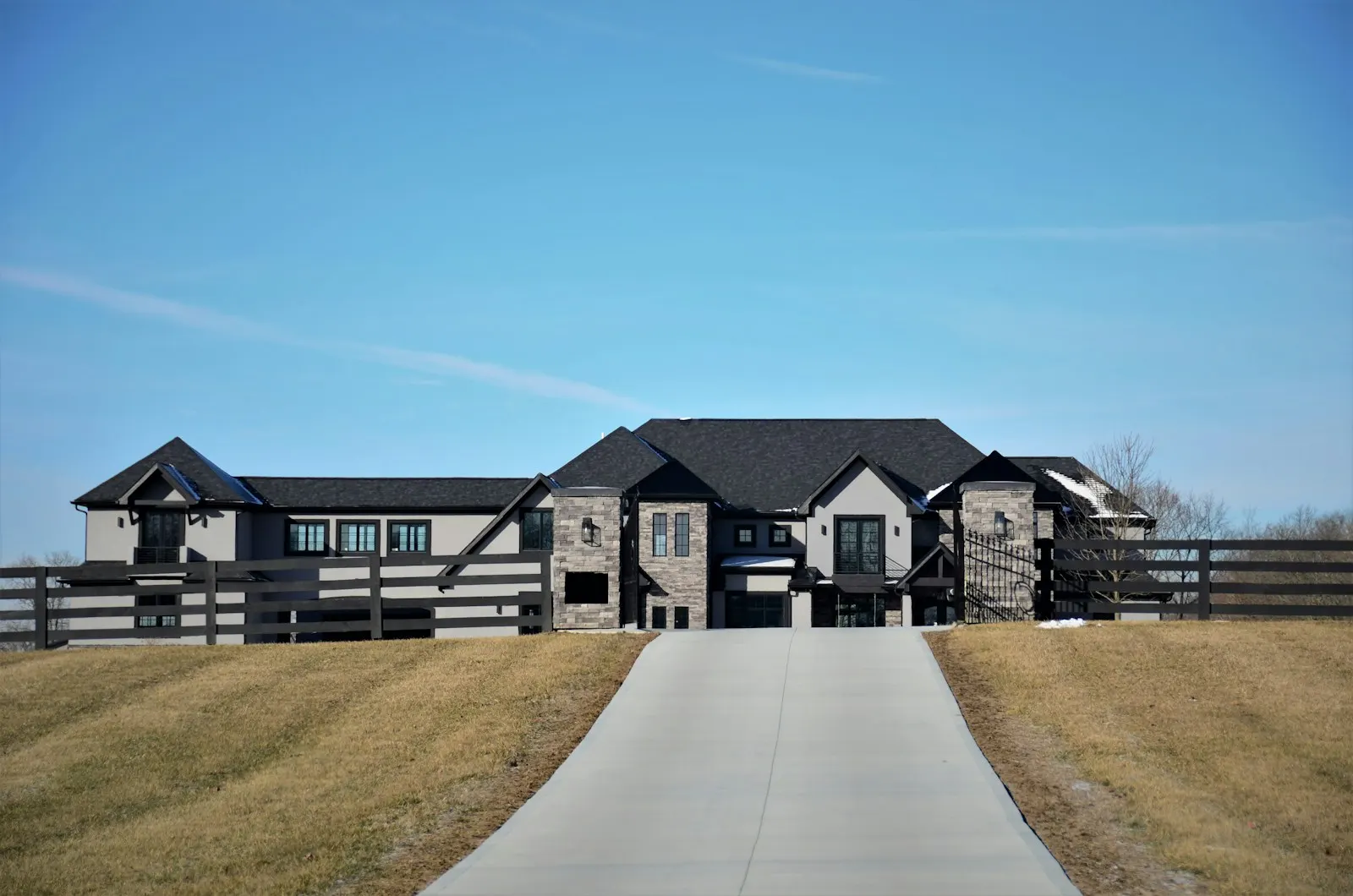
Most driveway problems start under the concrete. If the base is soft or washes out, the slab cracks and settles no matter how well it was finished. The ground gets dug out, a gravel base goes in and gets compacted, then the forms are set.
Thickness depends on what is driving on it. A car-only drive is usually fine at four inches. If you pull a camper or a boat, or a propane truck comes up the drive, it should be thicker.
On a steep drive, a broom finish gives tires something to grab. Water needs somewhere to go too, so slope and any drainage get planned before the pour, not after.
Typical driveway build
- Thickness
- 4 in. for cars. 5 to 6 in. for trucks, campers and boats
- Base
- Compacted gravel over solid ground
- Reinforcement
- Rebar or wire mesh, depending on the job
- Finish
- Broom finish for traction. Stamped borders available
- Ready to drive on
- About seven days. Heavy trucks wait longer
Questions people ask
Can you pour over my old driveway?
Usually not. If the old slab is cracked and settling, whatever caused that is still there. Tearing it out lets the base get fixed.
Can I salt it the first winter?
Avoid deicing salt on new concrete for the first winter. Use sand for traction instead.